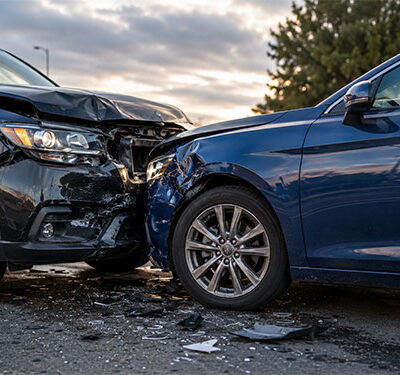


A California collision report may identify a Vehicle Code section beside an officer’s explanation of the crash. That number points to a driving rule. It does not, on its own, decide an insurance claim, prove every element of civil liability, or establish what an injured person will recover. This guide connects eight relevant traffic rules with the questions and records that help evaluate an accident.
Start with the conduct and the collision sequence
Write down the vehicles’ directions, lanes, movements, and what happened before the first impact. Then identify the rule that concerns that conduct. An unsafe speed issue differs from a left-turn yielding issue, even if both appear in the same event. Preserve the full report and any supplements so a code reference can be read alongside the officer’s observations, witness statements, and diagram.
Eight Vehicle Code guides for accident claims
| Code | Issue | Guide |
|---|---|---|
| 22350 | Unsafe speed | Read the 22350 guide |
| 21703 | Following too closely | Read the 21703 guide |
| 21801 | Left turns and U-turns | Read the 21801 guide |
| 22107 | Lateral movements and signals | Read the 22107 guide |
| 21453 | Red lights and red arrows | Read the 21453 guide |
| 22450 | Required stops at stop signs | Read the 22450 guide |
| 23123.5 | Handheld communication devices | Read the 23123.5 guide |
| 21950 | Pedestrian crosswalk duties | Read the 21950 guide |
A rule violation and an injury claim are different questions
Evidence Code 669 describes conditions for a presumption of failure to exercise due care based on a statutory violation. The violation must be connected to the injury, the occurrence must be of the kind the rule was designed to prevent, and the injured person must fall within the protected class. The presumption can also be rebutted under the statute. Identifying a section number is therefore only part of the legal analysis.
Even when a driving violation is established, the claim must address the collision’s connection to the injuries and the losses sought. More than one person’s conduct may require investigation. A traffic citation, no citation, or a report’s initial conclusion should not be treated as a substitute for reviewing the available evidence and the applicable rules.
Match the records to the issue
- Speed: weather, road conditions, sight distance, original video, and available vehicle data.
- Following distance: spacing, braking, lane changes, and the order of multiple impacts.
- Intersection movements: signal type, turn lane, stopping location, visibility, and witness viewpoint.
- Device use: specific observations, admissions, original recordings, and records obtained lawfully.
- Pedestrian collisions: crossing location, signals, entry timing, driver approach, and obstructions.
Read subdivisions and qualifications
A simplified description may omit an important distinction. The left-turn rule has a qualification for a driver who first yielded and signaled properly. A circular red signal and a red arrow have different provisions. Stopping at a stop sign does not answer every yielding question. Device rules include specific qualifications. Use the guide for orientation and review the official text applicable to the event; several rules may work together.
Preserve an accurate record early
Save original recordings before they are overwritten, keep witness contact details, and preserve dated scene photographs. Do not edit away the moments before impact or delete relevant messages. Medical care, work restrictions, expenses, and symptom changes need their own accurate timeline. Some evidence requires professional preservation or legal procedures, so avoid accessing another person’s device or entering an unsafe location yourself.
Related resources
Official Evidence Code 669; California comparative fault; collision reports and fault.
Discuss your accident with Weiss Attorneys
For a review of the collision and injury records, learn about our California car accident representation, read Scarlett Farrokh’s attorney profile, or request a consultation. Call (213) 583-0977. This guide provides general information; the applicable law, deadlines, and remedies depend on the facts.