

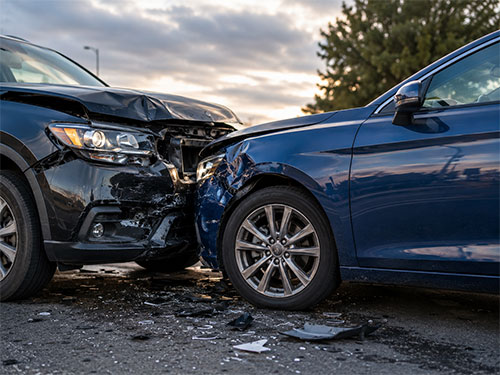

Vehicle Code 21703 often becomes relevant when one vehicle strikes the rear of another. The damage location is a starting point, but the driving history and impact sequence help explain what happened. A sudden merge, a traffic queue, or a chain reaction can create disputes that a photograph of the bumper cannot resolve.
What following distance does section 21703 require?
The statute calls for a following distance that is reasonable and prudent considering speed, traffic, and roadway conditions. It does not prescribe one universal number of feet or a fixed number of seconds for every driver and situation. Driver education guidance can help illustrate safer spacing, but should not be presented as the exact text of this law.
Why the lead vehicle’s braking matters
Stopping for a red light or slowing traffic is different from reversing unexpectedly or moving into a lane immediately before impact. Record what the lead vehicle was responding to and when it became visible. A claim that someone “stopped suddenly” needs a timeline; ordinary traffic can require sudden braking, and following drivers must account for the conditions.
A chain reaction needs a separate sequence
In a three-car collision, a middle vehicle may have hit the front vehicle before being struck from behind, or may have been pushed forward by the rear impact. Those events can lead to different responsibility arguments. Ask witnesses about the number and order of impacts, and compare that account with damage, vehicle positions, and available video. Multiple impacts can also matter to the medical history.
The role of lane changes and cut-ins
A vehicle entering a lane can alter the gap available to the following driver. The investigation should consider where the lane change began, the space remaining, the vehicles’ relative speeds, and the following driver’s opportunity to react. A cut-in allegation should be evaluated with evidence rather than assumed from a disputed statement after the crash.
What evidence is useful?
Original dashcam footage may show spacing before the collision, brake lights, and intervening traffic. Photographs should capture both ends of involved vehicles when safe. Preserve repair estimates and records, witness names, and the report diagram. Vehicle data may be relevant in some cases, but should be collected and interpreted through appropriate professional procedures.
Do rear-end crashes always mean full fault?
A rear impact does not by itself resolve every civil claim. Following distance, other driving conduct, and causation still need evaluation. California comparative-fault issues can arise where multiple people contributed. Medical records and loss documentation remain important even when the collision mechanism appears clear. Avoid guessing fault percentages before the evidence is reviewed.
Questions to organize your records
- Was the lead vehicle already established in the lane?
- What prompted braking?
- How many impacts occurred, and in what order?
- Does video show the gap before impact?
Official statute and related guidance
Read Vehicle Code 21703. For the standards governing a presumption based on a statutory violation, see Evidence Code 669.
Also read our Vehicle Code accident overview, our comparative-fault guide, and our guide to collision reports and fault.
Resources for your next step
For injuries in a following-distance collision, explore our rear-end accident representation.
Discuss your accident with Weiss Attorneys
For a review of the collision and injury records, learn about our California car accident representation, read Scarlett Farrokh’s attorney profile, or request a consultation. Call (213) 583-0977. This guide provides general information; the applicable law, deadlines, and remedies depend on the facts.