

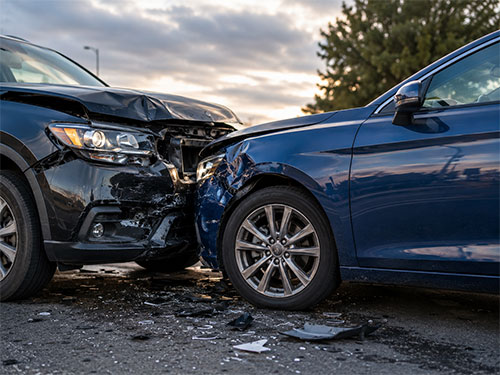

A stop-sign crash may involve a driver who never stopped, stopped beyond the proper location, or stopped but then entered unsafely. Vehicle Code 22450 addresses the stopping requirement. Right-of-way and the safety of entering the intersection can require additional rules and evidence.
Where must a driver stop?
For a stop sign at an intersection, section 22450 directs the driver to stop at a marked limit line. If there is no line, the driver must stop before entering the near-side crosswalk. If neither exists, the driver must stop at the entrance to the intersecting roadway. Photographs should show the sign and the applicable stopping location, rather than the sign alone.
A complete stop and a safe entry are separate
Stopping does not automatically establish that the driver could proceed safely. Another vehicle may already be approaching or within the intersection. Conversely, a right-of-way argument does not erase the obligation to stop. The review should identify the applicable yielding rules and examine each step of the approach, stop, observation, and entry.
Sight obstructions and moving forward
A parked truck, hedge, or building can restrict the view from the required stopping point. Record the obstruction’s location and the view available before entering traffic. A visibility problem requires careful analysis of how the driver proceeded; it does not simply excuse ignoring the stop. Conditions may change after the crash, so dated photographs can be useful.
Two-way and all-way stops
Establish which approaches were controlled by stop signs and whether an all-way plaque was present. An intersection with stop signs on only two approaches creates different questions from one where every approach is controlled. The order of arrival, vehicles already within the intersection, and intended movements should be documented without reducing the dispute to a slogan about who goes first.
Evidence of a rolling stop
A witness may see continuous movement, but their position and period of observation matter. Camera footage may show deceleration without showing a full stop at the proper place. Keep the original recording, including the approach. A reliable timeline should distinguish a stop behind another vehicle from the driver’s own stop at the intersection control.
How the evidence supports an injury claim
Obtain the report, scene diagram, photographs, and witness information. Record the impact location and vehicle paths. A cited violation can be part of the fault analysis, but causation, other drivers’ conduct, injuries, and losses still require proof. Preserve medical records and explanations of missed work while the collision evidence is being investigated.
Questions to organize your records
- Is there a limit line, crosswalk, or neither?
- Which approaches had stop signs?
- Did the witness see the entire approach?
- What happened after any initial stop?
Official statute and related guidance
Read Vehicle Code 22450. For the standards governing a presumption based on a statutory violation, see Evidence Code 669.
Also read our Vehicle Code accident overview, our comparative-fault guide, and our guide to collision reports and fault.
Resources for your next step
Discuss your accident with Weiss Attorneys
For a review of the collision and injury records, learn about our California car accident representation, read Scarlett Farrokh’s attorney profile, or request a consultation. Call (213) 583-0977. This guide provides general information; the applicable law, deadlines, and remedies depend on the facts.