

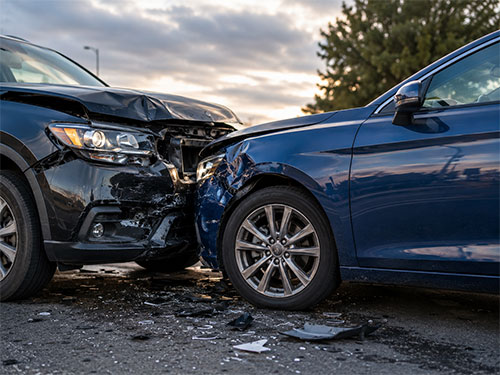

After a left-turn collision, drivers may disagree about which vehicle had the right-of-way. Vehicle Code 21801 addresses yielding during left turns and U-turns. Its two subdivisions matter: the rule is more specific than saying that the turning driver is always responsible.
What section 21801 says about yielding
Subdivision (a) requires a driver making a left turn or U-turn to yield to opposite-direction vehicles close enough to create a hazard during the turning movement. The driver must continue yielding until the maneuver can be completed with reasonable safety. The rule also covers left turns into public or private property or an alley, so the investigation is not limited to signal-controlled intersections.
The qualification in subdivision (b)
Subdivision (b) addresses a driver who has yielded as required and given the required signal. That driver may make the turn, and approaching opposite-direction drivers must yield as described in the statute. Whether those conditions were actually satisfied can be disputed. Beginning to turn does not, by itself, prove that a driver first yielded properly.
Signals, speed, and available sight distance
A protected arrow, a circular signal, and an uncontrolled driveway create different factual questions. Identify the signal for each direction and the lane each vehicle used. Speed and an obstructed view may affect the assessment of a developing hazard. Right-of-way should be analyzed alongside the applicable signal rules and ordinary care, not isolated from the rest of the collision.
A hypothetical timing dispute
Suppose a driver turns across opposing lanes after a large vehicle blocks the view. The other driver says the turn began directly in front of them. Useful questions include when the view opened, where each vehicle was then, and whether braking or evasive action was possible. A witness who saw only the final impact may not have observed the gap when the turn started.
Evidence to preserve early
Photograph the intersection layout, signal heads, turn lanes, and sight obstructions from safe locations. Preserve original camera files and identify nearby businesses that may have recorded the approach. A signal timing record may help explain the phases, but it does not automatically prove which light a particular driver faced at the collision time. Compare timestamps carefully.
How the rule fits an injury claim
A disputed turn can involve more than one negligent act. A statutory violation may be relevant when its requirements and connection to the harm are established. A citation or officer’s opinion should be evaluated with the supporting evidence. The claim also needs an accurate injury history, treatment records, and documentation of financial losses.
Questions to organize your records
- Was the turn left, a U-turn, or entry into a driveway?
- What signal governed each vehicle?
- When did the opposing vehicle become a hazard?
- Does the evidence address both subdivisions of 21801?
Official statute and related guidance
Read Vehicle Code 21801. For the standards governing a presumption based on a statutory violation, see Evidence Code 669.
Also read our Vehicle Code accident overview, our comparative-fault guide, and our guide to collision reports and fault.
Resources for your next step
Discuss your accident with Weiss Attorneys
For a review of the collision and injury records, learn about our California car accident representation, read Scarlett Farrokh’s attorney profile, or request a consultation. Call (213) 583-0977. This guide provides general information; the applicable law, deadlines, and remedies depend on the facts.