


A driver can signal and still make an unsafe movement. Vehicle Code 22107 addresses both reasonable safety before turning or moving right or left and appropriate signaling when another vehicle may be affected. Understanding those separate questions helps organize a lane-change injury claim.
The two parts of the rule
Before turning from a direct course or moving right or left on a roadway, the driver must be able to make the movement with reasonable safety. An appropriate signal is also required as provided by the chapter when another vehicle may be affected. This provision should be read with related rules applicable to the actual maneuver; it is not a complete statement of every turn, lane, or signal requirement.
Why a turn signal does not grant permission
A signal communicates an intended movement. It does not make an occupied lane available or excuse moving into a vehicle’s path. The important facts include when the signal began, whether another driver could see it, the available gap, relative speed, and when the moving vehicle crossed into the other vehicle’s travel path.
Sideswipe damage and competing accounts
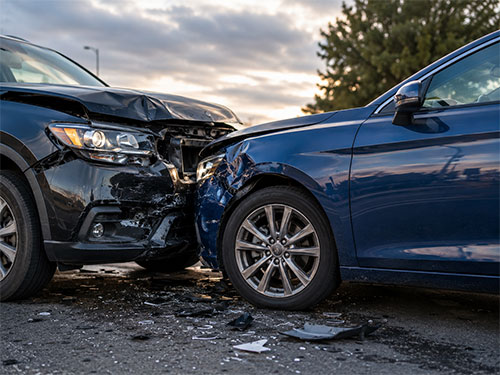
Both drivers may say they remained in their own lane. Record which panels were damaged and preserve photographs of scrape direction and vehicle positions. These clues may assist a qualified reconstruction, but damage alone does not always establish who crossed a lane line. Paint transfer, original video, road markings, and witness observation can help test the accounts.
Merging and ending lanes
A lane ending near construction or a freeway exit can complicate the event. Preserve the signs, lane configuration, and the point where vehicles began moving. Do not assume the same rule resolves a zipper merge, a lane change, and a vehicle entering from a ramp. An analysis may require additional code sections and the conditions at that location.
Motorcycles and blind-spot disputes
A driver may report that a motorcycle was not seen before a lateral movement. Visibility, mirror use, speed, relative positions, and the rider’s conduct need review. The mere presence of a blind spot does not settle the duty of care. Likewise, a motorcycle’s involvement should not be used as a shortcut to assign responsibility without the evidence.
Preserving a usable lane-change timeline
Keep the video showing several moments before impact, not only a short clip of the collision. Note the travel lane, intended exit, nearby vehicles, signal use, and what was actually observed. Separate recollection from later assumptions. Save claim correspondence and medical records so the collision account and injury timeline can be reviewed together.
Questions to organize your records
- Which vehicle moved laterally, and when?
- Was another vehicle affected by the movement?
- What do the signs and lane markings show?
- Is the original pre-impact footage available?
Official statute and related guidance
Read Vehicle Code 22107. For the standards governing a presumption based on a statutory violation, see Evidence Code 669.
Also read our Vehicle Code accident overview, our comparative-fault guide, and our guide to collision reports and fault.
Resources for your next step
Discuss your accident with Weiss Attorneys
For a review of the collision and injury records, learn about our California car accident representation, read Scarlett Farrokh’s attorney profile, or request a consultation. Call (213) 583-0977. This guide provides general information; the applicable law, deadlines, and remedies depend on the facts.