

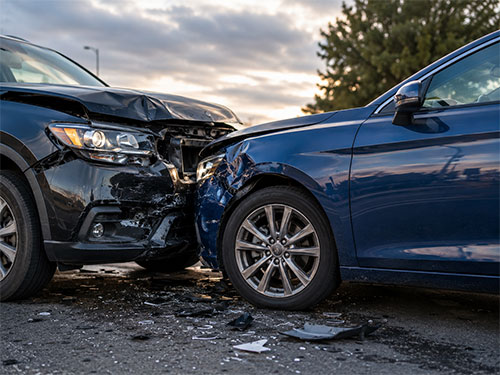

A collision report may list Vehicle Code 22350 even when a driver says they were traveling below the posted speed limit. The basic speed law concerns the safety of the speed under the conditions. An injury claim requires a careful explanation of those conditions and how the driving contributed to the collision.
What does Vehicle Code 22350 require?
Section 22350 requires a reasonable and prudent speed in light of weather, visibility, traffic, and the road’s surface and width. It also prohibits a speed that endangers people or property. The practical question is whether the driver adjusted to the actual situation. A posted limit does not answer every question about driving safely in fog, heavy rain, or slowing traffic.
How unsafe speed can contribute to an accident
Speed affects the time available to recognize a hazard and the distance needed to stop. Consider a hypothetical driver approaching a traffic queue in rain: a speed that worked on an empty, dry road may leave inadequate room to respond. The investigation should identify when the queue became visible, when braking began, and whether the driver had a reasonable opportunity to avoid impact. This example does not establish fault in a particular case.
Evidence that helps explain speed and conditions
Start with the location, time, travel direction, weather, and lighting. Photographs of standing water, a curve, lane narrowing, or sight restrictions can provide context. Witness descriptions are useful, but estimates of miles per hour should be distinguished from actual measurements. A short video may show movement without allowing a reliable speed calculation unless timing and distance can be established.
Vehicle data and reconstruction have limits
Some vehicles record information relevant to braking or speed around a collision; availability depends on the vehicle and event. A qualified professional may be needed to preserve and interpret it. Damage photographs alone should not be treated as a precise speedometer. Road markings, tire marks, vehicle positions, and video can require combined analysis rather than a single dramatic image.
Does a 22350 finding guarantee compensation?
No. The evidence must connect the conduct to the crash and the claimed harm. Other drivers’ movements, visibility, braking, and the sequence of events may also matter. A statutory violation can support a negligence analysis when the applicable legal requirements are met, but the amount recoverable still depends on injuries, documented losses, fault issues, and available coverage.
What to preserve after an unsafe-speed crash
Keep the original collision report and any supplements, photographs, dashcam files, repair records, and witness contact information. Document medical care and work restrictions accurately. Ask about preserving relevant vehicle data before repair, sale, or disposal. Do not return to a dangerous roadway to collect evidence or rely on a social-media estimate of collision speed.
Questions to organize your records
- Where did the first hazard become visible?
- What changed in weather, traffic, or road conditions?
- Which observations are measurements, and which are estimates?
- Is there original video or vehicle data to preserve?
Official statute and related guidance
Read Vehicle Code 22350. For the standards governing a presumption based on a statutory violation, see Evidence Code 669.
Also read our Vehicle Code accident overview, our comparative-fault guide, and our guide to collision reports and fault.
Resources for your next step
Discuss your accident with Weiss Attorneys
For a review of the collision and injury records, learn about our California car accident representation, read Scarlett Farrokh’s attorney profile, or request a consultation. Call (213) 583-0977. This guide provides general information; the applicable law, deadlines, and remedies depend on the facts.