


Updated October 22, 2026 · California injury questions
A missing police report does not automatically prevent a California car accident injury claim. You still need evidence of responsibility, injury and losses. Driver information, photographs, witnesses, video and other records may help establish what happened. Separate police, DMV and insurance reporting duties must also be checked.
What evidence can replace a missing crash report?
- Original photographs of damage, vehicle positions, traffic controls and the surrounding scene.
- Exchanged driver and insurance details, including plate numbers and contact information.
- Dashcam recordings, nearby business video and independent witness accounts.
- Emergency-response, towing and repair records that help establish the timeline.
- Medical records and work-loss documents connecting claimed harm to the incident.
Example: a parking-lot collision with no responding officer
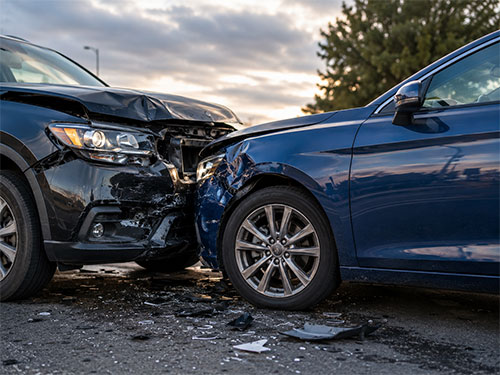
Two drivers exchange information after a parking-lot crash. Photos, a nearby camera, witnesses and vehicle damage may help establish movement and responsibility even if no officer investigated. The absence of a report does not prove either driver’s version; an adjuster’s acceptance of a claim also does not establish every disputed injury.
What if the other driver changes their story?
Preserve their original messages and your own dated account. Identify what you personally observed and which details are uncertain. Compare the accounts with independent evidence rather than assuming a later disagreement makes the case impossible.
Can I report the accident later?
Ask the appropriate agency about its process and state the actual incident date. A later report may not reconstruct an investigation that never occurred. A DMV SR-1, an insurer notice and a police report are different records; one should not be assumed to satisfy the others.
Does an unfavorable police report end my case?
Not necessarily. The report’s sources, errors and supporting facts should be examined. The existing sections below explain corrections, evidentiary issues and the distinction between an officer’s assessment and civil responsibility.
Identify which agency investigated
Determine whether the responding agency was the California Highway Patrol, a city police department, or another agency. Keep the incident number, collision date, location, and names of the involved parties. Request the report through that agency’s process. The CHP provides a crash report request procedure for qualifying parties of interest; another agency may use a different form.
Read the report in layers
- Basic information: names, vehicle descriptions, location, date, and insurance information.
- Direct observations: what the officer personally saw on arrival, such as damage or roadway conditions.
- Statements: what drivers, passengers, or witnesses told the officer.
- Diagrams and measurements: what they show and whether they are approximate.
- Conclusions: the officer’s view of contributing factors or violations and the factual basis offered for it.
An officer who arrives after the impact may be relying partly on statements rather than personal observation of the collision. A diagram may omit a detail without proving that the detail did not exist. Conversely, a favorable conclusion should not be treated as a substitute for preserving the video, witnesses, and physical evidence supporting your account.
Address factual errors specifically
If the report lists an incorrect vehicle, misspells a name, or misstates a fact you can support, contact the agency about its correction or supplemental statement process. Explain the particular issue and provide supporting material. Keep a copy of your request. The agency may not agree to change an officer’s opinion merely because one party disputes it.
Do not alter the report file yourself. Preserve the original version and any later amended version. If you were unable to provide a statement at the scene because of injury or transport, document that circumstance and ask how to submit accurate supplemental information.
Trial admissibility is a separate issue
California Vehicle Code section 20013 restricts trial use of certain accident reports. That provision should not be simplified into a claim that every police record is always admissible or that no information from an investigation can ever be used. The type of report, the particular content, hearsay issues, and the proposed use need separate legal analysis. An officer’s testimony and a witness’s own testimony also raise different questions from submitting an entire report.
An insurer’s reading is not the final answer
Ask an adjuster who relies on the report to identify the specific finding and supporting evidence. Compare the report with photographs, signal information, video, witness accounts, and medical records. If responsibility is disputed, the fact that an officer issued a citation does not automatically resolve all civil liability or damages issues.
What if no report was prepared?
A missing report does not automatically prevent an injury claim. Preserve exchanged driver information, photographs, witnesses, emergency response records, and other evidence. Determine whether separate reporting obligations apply rather than assuming that a call to an insurer satisfies every requirement. Obtain advice about deadlines while the investigation continues.
Official resources
CHP: request a crash report; California Vehicle Code section 20013.
Discuss your claim with Weiss Attorneys
Bring the relevant records, insurance correspondence, and any proposed settlement documents to a consultation. Weiss Attorneys can evaluate the available evidence and the questions specific to your situation. Learn about our California car accident representation and California post-accident checklist.
Read Scarlett Farrokh’s attorney profile, request a consultation, or call (213) 583-0977. This article provides general California information; the applicable rules depend on the facts, coverage, and deadlines of the particular claim.