

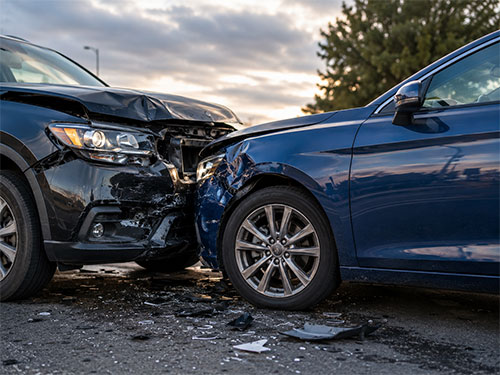

After a collision, it is easy to assume that the officer or insurance company has completed every required report. California’s DMV reporting requirement is separate. Drivers should check whether an SR-1 is required and preserve proof of submission, even while the police investigation or insurance claim continues.
When the DMV requires an SR-1
The DMV states that an SR-1 must be sent within 10 days if someone is injured, no matter how minor the injury, someone is killed, or property damage is over $1,000. The report may be completed by you or your insurance agent, broker, or legal representative. Review the DMV’s current instructions for the circumstances of your collision.
The requirement is separate from a report made to police, CHP, or your insurer. Do not assume that a responding officer files the SR-1 on your behalf. Likewise, notifying an adjuster does not by itself establish that the DMV received the required report.
Gather information before starting
- The collision date, time, and location.
- Driver identification and contact information.
- Vehicle and owner information.
- The insurance policy and coverage information applicable on the collision date.
- Information about injuries, deaths, and property damage requested by the form.
- Any supporting records needed to accurately identify the other parties.
Use accident-date insurance information
A policy purchased after the crash does not establish coverage on the date of the collision. Use the correct insurer, policy information, and effective dates. If you were driving a borrowed or rented vehicle, determine which information the form requires rather than assuming the driver and registered owner are the same person.
If an entry is uncertain or unavailable, follow the form’s instructions and obtain help where needed. Do not invent another driver’s policy number, injury description, or estimate. Keep the exchanged information and any later verified correction so the record can be explained accurately.
Preserve submission confirmation
Save a complete copy of the report and confirmation or delivery evidence. If an agent or representative submits it, request a copy and confirmation. A statement that the report “will be handled” is different from proof that it was submitted. Keep DMV notices with the report and respond promptly to any request or action.
Reporting does not settle fault or damages
An SR-1 is not a civil judgment or an injury settlement. It should not be confused with the investigating officer’s narrative, a claim demand, or a release. Completing it does not establish that you caused the accident, that another person is liable, or that a particular coverage will pay.
The report also does not preserve every lawsuit or insurance deadline. Continue tracking the separate requirements for police notice, policy claims, government claims where relevant, and any civil action. Those processes can operate on different timelines.
What if the deadline was missed?
Do not ignore the issue or alter the accident date to make the report appear timely. Review the DMV’s instructions and obtain advice about the actual circumstances and any resulting notices. The proper response depends on what occurred and the status of the DMV process; there is no reason to assume that an insurance claim alone cures the omission.
Keep the documents distinct
A practical accident file can contain separate folders for the SR-1, police report, insurer correspondence, medical records, and repair information. That organization makes it easier to answer a request accurately without sending an unrelated document or mistaking one confirmation for another.
Official resource
California DMV: Report of Traffic Accident Occurring in California.
Discuss the facts of your claim
Weiss Attorneys can review the records and the legal questions raised by your situation. Learn about our related injury representation and this related claim guide.
Read Scarlett Farrokh’s attorney profile, request a consultation, or call (213) 583-0977. This article provides general California information. The applicable duties, deadlines, and available remedies depend on the particular facts.