

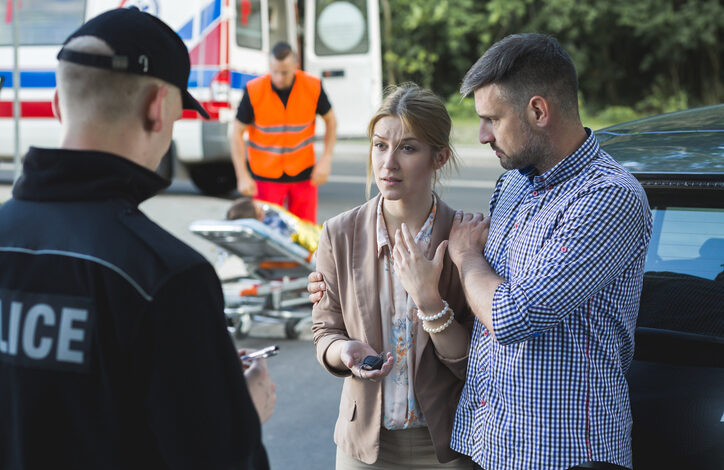

A useful witness account explains what the person saw, where they were and which part of the collision they observed. A statement that simply says a driver “was at fault” does not identify the facts supporting that conclusion. Preserve the witness’s own words and distinguish direct observations from estimates or information learned afterward.
Start with the witness’s vantage point
Ask where the witness was standing or traveling, the direction they were facing and when their attention turned to the vehicles. Note obstructions, distance, lighting and whether the witness saw the approach or only the impact. A person may see a vehicle’s movement without being able to see the relevant traffic signal.
Use open questions
- What first drew your attention?
- What did you see each vehicle do before contact?
- Which signal or lane marking could you personally see?
- What happened immediately after the impact?
- Is any part of your account an estimate or something another person told you?
Do not suggest a desired answer, rehearse an account or pressure someone to sign. Ask for contact details only if the person is willing. Obtain consent before recording and discuss applicable recording rules with counsel.
Keep the original statement and supporting files
Retain the original recording, notes, date and method of collection. Preserve the full video rather than only an edited excerpt. If the witness later clarifies a point, keep the earlier version too and record what changed. Do not edit a person’s uncertainty out of the statement.
What if witnesses disagree?
Different vantage points and timing can explain conflicting observations. Compare each account with photographs, footage, physical damage and other records. A passenger’s account is not automatically unusable, and a bystander’s account is not automatically conclusive. Credibility and the opportunity to observe require an individual assessment.
A written statement may help an investigation, but it is not automatically admissible proof of every fact at trial. Counsel can evaluate whether follow-up, a deposition or testimony is needed. Read our post-accident checklist and guide to accident lawsuit evidence.
Witnesses in a rear-end or chain-reaction crash
Ask which contact the witness actually saw and whether any vehicle was already stopped after an earlier impact. Record where the witness was in relation to the vehicles. Hearing a crash and then seeing the vehicles is different from observing the approach and first contact.
Our rear-end collision guide explains how to preserve the impact sequence. For a broader overview of how witness evidence fits with fault, insurance and injury documentation, visit our California car accident lawyer guide. For local representation, see our Sherman Oaks car accident attorney page.
Discuss your claim with Weiss Attorneys
Call (213) 583-0977 or request a free consultation. Our office is in Sherman Oaks, with phone and video consultations available throughout California. Hablamos Español. For accepted contingency matters, attorney fees and case costs are governed by the written agreement. No outcome is guaranteed.
Prepared by Weiss Attorneys. Updated October 16, 2026. General information; the facts, applicable law, insurance terms and deadlines require an individual review.