

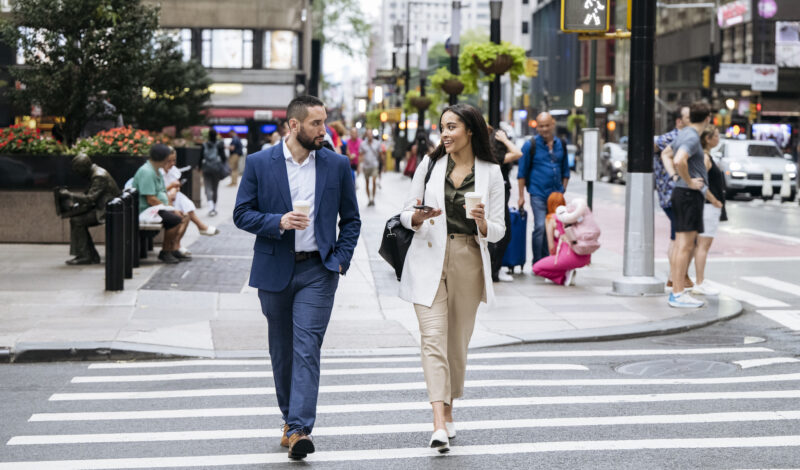

A pedestrian collision requires a review of both the driver’s conduct and the pedestrian’s conduct. Neither a collision nor an insurer’s use of the word “jaywalking” establishes fault by itself. The crossing location, signals, visibility, vehicle movement and opportunity to respond need to be evaluated together.
Crossing outside a marked crosswalk does not answer every question
California recognizes both marked and unmarked crosswalks. Rules differ depending on the location and traffic controls. Drivers have duties of care toward pedestrians even when a pedestrian may also have failed to act reasonably. Photograph the intersection, lane layout, signals, lighting and sightlines so the actual crossing can be evaluated. Do not treat a current image as proof of what the scene looked like on the incident date.
Comparative fault can reduce a supported recovery
California generally allocates responsibility according to each party’s contribution to the harm. If the evidence supports an award and the pedestrian is assigned a percentage of fault, damages can be reduced by that percentage. An insurer’s initial percentage is a negotiating position to examine, not a court finding. A traffic citation also does not decide every issue of civil liability.
Evidence that helps test conflicting accounts
- The pedestrian’s starting point, route, pace and position when first visible.
- The driver’s direction, turn, lane and available view.
- Signal phases and the timing of each person’s movements.
- Original video, witness locations and the point of impact.
- Physical evidence and the medical record connecting the incident to the injuries claimed.
Separate observations from assumptions. A witness who saw the impact may not have seen the signal or the approach. Video from one angle may show a person’s movement while obscuring another relevant area. Preserve the entire file and record what it actually shows.
Prepare for an individual claim review
Keep the report number, treatment records, bills, work restrictions, insurance correspondence and any proposed release. Public-entity involvement can create earlier claim requirements. Seek advice promptly about deadlines and evidence preservation.
Review the California DMV rules-of-the-road guidance, our pedestrian accident practice page, and the witness evidence guide.
Discuss your claim with Weiss Attorneys
Call (213) 583-0977 or request a free consultation. Our office is in Sherman Oaks, with phone and video consultations available throughout California. Hablamos Español. For accepted contingency matters, attorney fees and case costs are governed by the written agreement. No outcome is guaranteed.
Prepared by Weiss Attorneys. Updated October 13, 2026. General information; the facts, applicable law, insurance terms and deadlines require an individual review.