

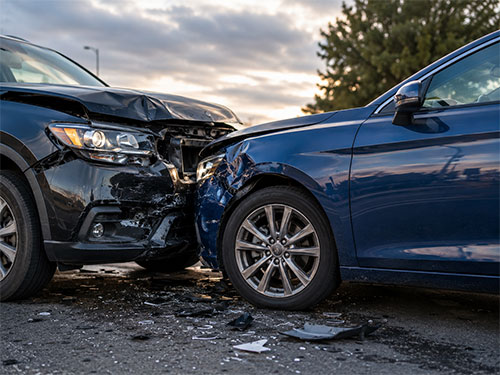

An injured passenger may have no control over either driver’s actions, yet still face a dispute about which vehicle caused the collision. In a multi-vehicle accident, each impact and each driver’s conduct may need separate investigation. Being a passenger does not automatically identify the responsible insurer or establish that every driver is liable.
Document the sequence rather than relying on vehicle numbers
A report may label vehicles as one, two, or three for convenience. Those labels do not by themselves explain fault. Record what you observed about the first impact, later impacts, movements, and where you were seated. Distinguish an impact you felt from a vehicle movement you actually saw.
Preserve photographs of the vehicles and their positions, available video, witness information, and emergency response records. A vehicle being pushed into another vehicle can raise different issues from a driver independently making an unsafe maneuver. The evidence must establish what happened before conclusions are assigned.
The driver of your vehicle may also need evaluation
A claim is not necessarily limited to the other driver merely because you were riding with a friend, relative, coworker, or rideshare driver. The conduct of the driver carrying you must be evaluated fairly along with the other participants. That does not mean the driver is liable simply because you were injured in their car.
Tell counsel about the relationship and the circumstances of the trip. Employment, household, vehicle ownership, and rideshare status can affect coverage analysis. Do not assume a policy exclusion applies or does not apply without reviewing the actual policy and relevant facts.
Coverage can involve several separate questions
- Which drivers or other parties may be legally responsible?
- Which liability policies covered those parties on the accident date?
- Are there per-person and per-accident limits affecting multiple claimants?
- Could medical payments or other first-party coverage apply?
- Could uninsured or underinsured motorist coverage apply under an eligible policy?
- Would a proposed settlement affect claims against another party or insurer?
Multiple injured people can affect available insurance
A policy may have limits applying to one person and to the accident as a whole. Several claimants can create an allocation issue even when responsibility is relatively clear. Policy limits are different from the amount of proven damages. Obtain reliable coverage information and evaluate potential additional sources rather than treating an initial offer as the full available recovery.
Preserve your own injury evidence
Keep treatment records, bills, wage loss documentation, and a factual account of limitations. A strong showing about fault does not replace proof of your injuries and losses. Provide accurate medical history and distinguish symptoms from before the crash, changes after it, and any later event affecting the same condition.
A passenger’s account may also be useful to other participants, but tell the truth without coordinating stories. Preserve messages and prior statements. If your view was blocked or you were looking elsewhere, acknowledge that rather than adopting another person’s version as your own observation.
Review releases across all claims
A release signed for one payment can contain language extending to additional people or claims. Identify the parties and scope before accepting it. First-party insurance notice, consent, and recovery rights may also require attention. Settling one part of a multi-party dispute should be coordinated with the remaining claims.
Official insurance resource
California Department of Insurance Automobile Insurance Guide.
Discuss the facts of your claim
Weiss Attorneys can review the records and the legal questions raised by your situation. Learn about our related injury representation and this related claim guide.
Read Scarlett Farrokh’s attorney profile, request a consultation, or call (213) 583-0977. This article provides general California information. The applicable duties, deadlines, and available remedies depend on the particular facts.