

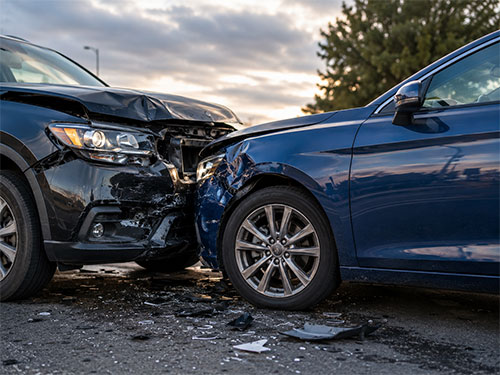

California hit-and-run injury lawyer: evaluating your next step
If a driver fled after injuring you, Weiss Attorneys can review the collision evidence and possible insurance options. Request a free consultation or call (213) 583-0977. Our Sherman Oaks office offers phone and video consultations throughout California.
What can an attorney investigate?
Depending on the facts, the investigation may address witnesses, nearby video, vehicle identifiers, the crash report and policies potentially covering the injured person. A lawyer cannot guarantee the driver will be found or that an unknown-driver claim qualifies for insurance benefits. A useful consultation separates the evidence needed to establish the crash from the requirements for each possible coverage.
Can I seek help while the police investigation is open?
Yes. You can discuss the civil injury and insurance issues without waiting for a final criminal outcome. Preserve your records and report accurately; a pending investigation does not automatically extend an insurance condition or civil deadline.
Related: California car accident representation and UM and UIM claim guidance.
When a driver leaves the scene, an injury claim presents two separate problems: establishing what happened and identifying a source of compensation. A police report is important, but it does not automatically establish coverage. The evidence and the wording of the applicable insurance policy both matter.
Report the incident without waiting to identify the driver
Call 911 when someone needs emergency assistance or the situation is dangerous. Give the investigating agency an accurate account of the incident, including the direction the vehicle traveled and anything you actually observed about its color, make, or license plate. Distinguish a complete plate number from a partial number or an uncertain recollection. Ask for the incident number and the agency handling the investigation.
Notify your own insurer promptly and ask which coverages could apply. The California Department of Insurance explains that policies may impose time limits for reporting a hit-and-run to police. Do not assume that the general deadline for an injury lawsuit is also the deadline for satisfying insurance notice requirements. Keep the date, time, claim number, and written confirmation of each report.
Preserve details that can identify the vehicle
- Save the original dashcam file and a separate backup. Preserve footage before and after the impact rather than only a short edited clip.
- Photograph vehicle damage, debris, skid marks, the roadway, and the surrounding businesses when it is safe to do so.
- Obtain witnesses’ names and contact information. Ask whether they saw the impact, the vehicle leaving, or both.
- Identify possible cameras and promptly request preservation of the relevant time period. A business may overwrite footage before a police investigation is complete.
- Record the location and approximate time precisely. Note any uncertainty rather than filling gaps with a guess.
An unidentified driver and an uninsured driver are different problems
Uninsured motorist bodily injury coverage and coverage for damage to your vehicle are distinct. An unknown-driver claim can involve special statutory and policy conditions, including questions about vehicle contact and reporting. A near miss that causes a crash should not be assumed to qualify under the same rules as a direct collision. Have the facts and policy reviewed before concluding that coverage exists or does not exist.
The Department of Insurance’s automobile guide explains that uninsured motorist property damage coverage requires identification of the uninsured driver. Collision coverage may be a separate avenue for vehicle repairs, subject to the policy and deductible. Medical payments coverage, if purchased, may also have a different role. None of these coverages should be treated as interchangeable.
What if the driver is found later?
Provide new identifying information to the investigator and insurer. Preserve messages, photographs, and the source of the information. Identification can change the available liability and insurance analysis, but finding the vehicle alone may not establish who was driving or why the collision occurred. Avoid contacting a suspected driver in a way that creates a confrontation.
Questions to ask your insurer
- Which bodily injury, collision, and medical payments coverages are being considered?
- What notice, documentation, or other claim conditions apply?
- Does the insurer need access to the damaged vehicle before repairs?
- Will it provide its coverage position and the relevant policy provisions in writing?
Official resources
California Department of Insurance: So You’ve Had an Accident; Automobile Insurance Guide.
Discuss your claim with Weiss Attorneys
Bring the relevant records, insurance correspondence, and any proposed settlement documents to a consultation. Weiss Attorneys can evaluate the available evidence and the questions specific to your situation. Learn about our California car accident representation and accident resources by city.
Read Scarlett Farrokh’s attorney profile, request a consultation, or call (213) 583-0977. This article provides general California information; the applicable rules depend on the facts, coverage, and deadlines of the particular claim.